Twisted World
Play Twisted World
Twisted World Screenshots

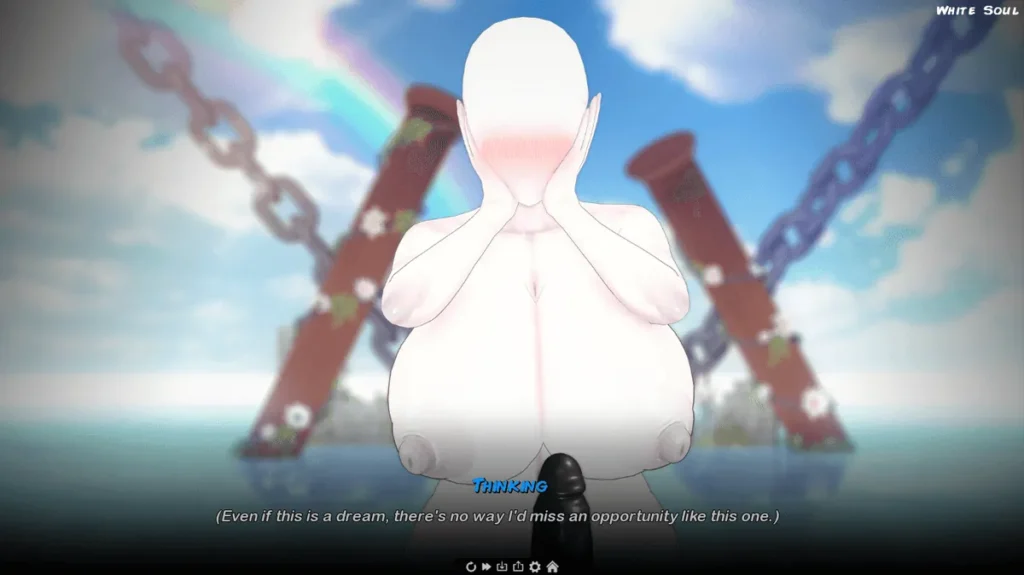
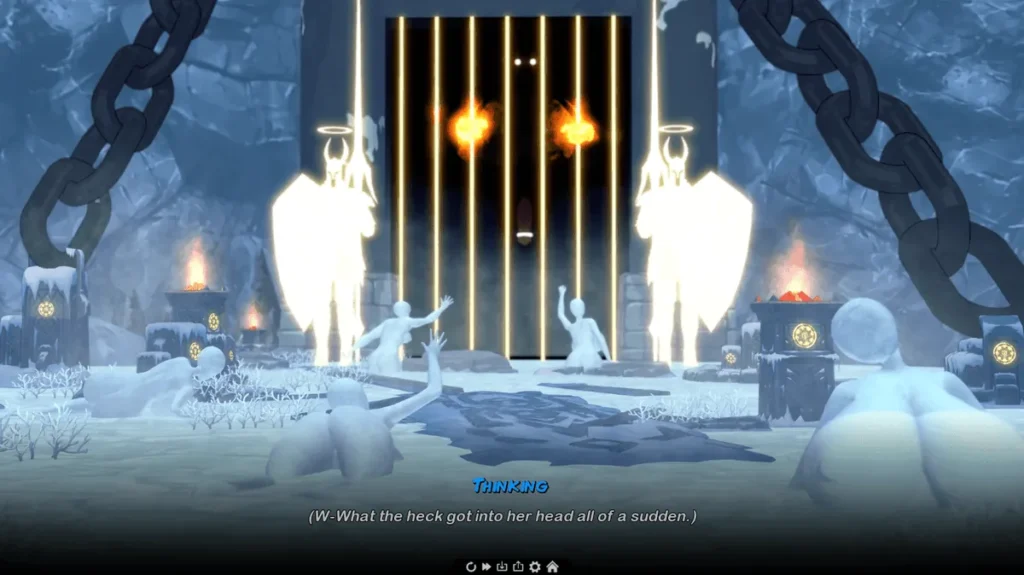
Twisted World review
A player-focused guide and walkthrough for Twisted World
Twisted World is a narrative-driven adult-oriented game that drops players into an alternate dimension with flipped social dynamics and high-stakes choices. In this article I describe the game’s premise, core systems, character arcs, and provide hands-on strategies drawn from my play sessions to help you navigate Twisted World. If you’re curious about the world-building, key decisions, or want practical tips to reach specific outcomes, this guide will walk you through what I learned while playing.
Understand the Setting and Story of Twisted World
Let me tell you about the moment Twisted World truly hooked me. I’d just spent ten minutes being politely yet firmly interrogated by a child bureaucrat in a too-large suit, while a heavily armored guard—who looked like she’d bench-press my car—brought me a cup of tea and called me “sir” with a terrifyingly sweet smile. I was utterly, wonderfully lost. This game doesn’t just tell you about a strange world; it immerses you in its unsettling, hilarious, and thought-provoking reality from the very first click.
If you’re about to step into this looking-glass universe for the first time, this guide will help you understand the lay of the land. We’re going deep on the Twisted World game overview, its brilliant role reversal narrative, and the Twisted World factions that will shape your journey. Consider this your essential primer to the setting and story. 🗺️➡️😵
What is Twisted World and its premise?
At its core, Twisted World is a narrative-driven RPG set in a meticulously crafted alternate dimension game. The premise is deceptively simple: you play as a version of yourself who stumbles through a dimensional rift into a parallel Earth where fundamental social and power dynamics are inverted. It’s not just about genderswapped characters; it’s a complete upheaval of historical norms, professional expectations, and cultural stereotypes.
Imagine a world where:
* The most celebrated historical generals and rulers are primarily women, with statues and history books to match. 👑⚔️
* Fields like nursing, primary education, and secretarial work are male-dominated professions, with their own complex cultures and hierarchies.
* Emotional openness and communal care are seen as markers of masculine strength, while stoic, strategic ruthlessness is a feminine ideal.
* The physical ideals and fashion norms are completely flipped, creating a visual landscape that feels familiar yet deeply foreign.
You arrive as an outsider, a walking anomaly who doesn’t instinctively understand its rules. Your Twisted World game overview starts with survival and understanding. The primary conflict isn’t about a giant evil overlord (at first, anyway); it’s about navigating a society where every interaction is loaded with subtext you weren’t raised to understand. Your goal is to find a way home, but to do that, you’ll need to navigate the factions fighting to either use, help, or eliminate you.
Key story beats and world-building details
The Twisted World storyline masterfully uses your disorientation as a narrative tool. You’re not given an info-dump; you learn by doing, often through awkward or dangerous mistakes.
The inciting incident is a brilliant piece of personalization. The game uses a brief, quirky personality quiz at the very start (seemingly innocent) to craft the circumstances of your arrival. In my case, my admitted dislike for bureaucracy meant I blinked into existence in the dusty back office of a municipal archives, much to the shock of a very timid male clerk. A friend who said they loved order appeared in the spotless, regimented lobby of a female-led security firm. This immediate connection between your real-world traits and your in-world situation is genius.
From there, the early hours are a cascade of confusion and discovery. Here’s a concise timeline of what you can expect:
| Sequence | Event | Player Impact |
|---|---|---|
| The Arrival | You materialize in the **Twisted World**, disoriented and immediately identified as an “Anomaly.” Local authorities are notified. | Establishes the core gameplay loop: observe, learn, and choose how to present yourself. Your first dialogue choices test your comprehension of the new social rules. |
| First Contact | You are detained and questioned by a representative of one of the major **Twisted World factions**. Your explanation of “another dimension” is met with either intrigue or suspicion. | This is your first major narrative branch. Do you play the confused victim, the assertive dimensional traveler, or something in between? This choice subtly aligns you with faction sympathies early on. |
| The First Choice | Offered a form of “asylum” or “study,” you must decide which faction to initially cooperate with for safety and information. This often means leaving the detention center with either **The Saviors** or **The Seekers**. | A major agency moment. This decision opens up your first major quest hub, determines your initial companion, and locks you out of some early side content tied to the opposing faction. |
| Immediate Consequences | Your chosen faction guides you through a public space—a market or transit hub. Your companion will interpret the world for you, pointing out inverted norms. You may face public curiosity or hostility. | World-building through active commentary. You learn the stakes: some see you as a curiosity, others as a threat. You get your first taste of how your presence disrupts the status quo. |
The world-building is in the details. Newspapers have headlines celebrating female athletic dominance. Advertisements feature men in intricate, colorful makeup selling cleaning products. The architecture in power centers feels more fluid and organic, while domestic spaces often have a sturdy, utilitarian design. It’s a constant, visual reinforcement of the role reversal narrative.
My first-hand experience with the narrative tone
The tone of Twisted World is its secret weapon. It’s a darkly comedic satire that never lets you get too comfortable. One minute you’re laughing at a parody of toxic workplace culture (now with totally different gender dynamics), and the next, you’re facing the genuine, chilling consequences of a society built on a different kind of systemic bias. 😂➡️😨
My first major reaction was to the concept of “Emotional Labor” as a celebrated, male-dominated field. I encountered a group called “Harmonizers”—men trained as mediators and communal caregivers who were respected public figures. Seeing a traditionally devalued role treated with such reverence was a punchy, satirical moment that made me reevaluate my own world.
My Early Choice Anecdote: After my initial questioning, I was given a choice: be placed under the protective, almost maternal wing of The Saviors (who saw me as a vulnerable refugee), or be handed over to the intellectually curious Seekers (who saw me as a fascinating specimen). I, perhaps arrogantly, chose the Seekers, wanting to be seen as a source of knowledge rather than a victim.
Big mistake. My entire early game changed. Instead of being nurtured and gently taught, I was constantly tested, interviewed, and placed in clinical observation scenarios. Relationships felt transactional. A simple quest to get a city pass turned into a sociological experiment where my methods were documented. It created a uniquely cold, isolating playthrough where I felt like a lab rat, which was fascinating but emotionally draining. It taught me that in Twisted World, choosing who defines you first is the most important decision you make.
This tone directly influences your decisions. Do you lean into the absurdity and make sarcastic, anachronistic remarks that confuse the locals? Or do you play it straight, seriously engaging with the trauma of being displaced? The game supports both, and the characters react accordingly. The satire ensures the setting never feels preachy; instead, it holds up a warped mirror and lets you draw your own conclusions.
A Note on Themes: Given the nature of its alternate dimension game premise, Twisted World engages with mature themes including systemic power structures, social conditioning, and cultural displacement. It contains narratives that explore discrimination from an inverted perspective, which some players may find challenging or reflective of real-world experiences. The game’s strength is in handling these themes with a mix of sharp wit and genuine pathos.
Ultimately, understanding the Twisted World storyline and setting is about embracing the disorientation. Your confusion is the point. Every strange look, every inverted expectation, is a piece of the puzzle. This role reversal narrative isn’t just a gimmick; it’s the engine that drives every conversation, alliance, and conflict. The Twisted World factions you’ll meet—from the protective Saviors to the ruthless Legacy—are all products of this world, and choosing how you, an outsider, fit into their struggle is what makes this journey unforgettable. Your agency doesn’t just change the plot; it changes how you see the reflection in the twisted mirror.
Twisted World is a choice-driven title with a bold premise, branching relationships, and multiple outcomes that reward careful planning and experimentation. Throughout this guide I shared narrative context, mechanical breakdowns, character-focused strategies, and practical tips from my own play sessions to help you make deliberate choices and explore alternate paths. If you enjoyed this walkthrough, try the save-and-test approach outlined above, experiment with relationship priorities that interest you, and share your findings with the community so others can benefit.